>
Lead Follow-Up
A new lead comes in, but nobody owns the next step. By the time someone notices, the buyer has moved on.


Important work, handled
ChatGPT and Claude can help with the work. Varon keeps the business rules attached. Nothing gets missed, delayed, or lost between the tools you already use.
What this fixes
A new lead comes in, but nobody owns the next step. By the time someone notices, the buyer has moved on.
A customer issue gets flagged in email or chat, but the owner, rule, and approval path stay unclear.
Refunds, discounts, schedule changes, and promises move too slowly because the right approver is not pulled in.
Unpaid invoices and payment follow-ups sit between accounting, inboxes, and customer records with no clean proof trail.
Varon exists to close these gaps.
One concrete loop
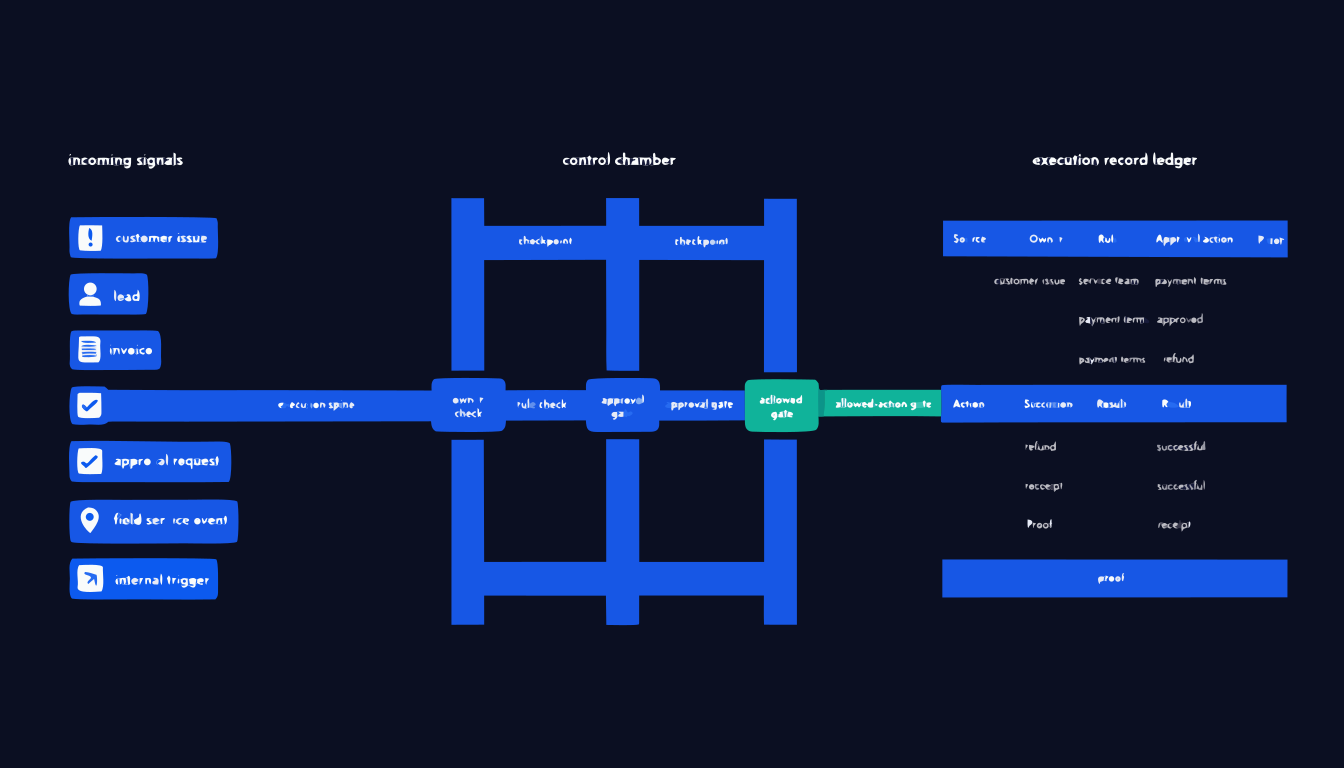
The model is simple when you see one real path. Catch the issue, name the owner, apply the rule, pause for approval, take the allowed action, and keep the proof.
Execution record
Acme HVAC flags a same-day install complaint from customer Priya Shah.
Varon assigns the service manager because the job is active and the account is high priority.
Escalations over $500 or involving a date promise must pause before the customer is updated.
The operations lead approves a technician callback and a revised arrival window.
Varon dispatches the task in ServiceTitan and sends the approved customer update.
The trigger, owner, approval, action, timestamp, and result are recorded for review.
Scope clarity
Varon is not more software to watch. It is the control layer for the handoffs that already cross your inbox, CRM, service system, accounting tool, and team chat.
Coordinate execution
Turn a signal from one tool into a clear path across the people and systems that need to act.
Enforce ownership
Name the person or role responsible before the work drifts into a shared inbox or open task list.
Enforce rules
Check the operating rule before a promise, refund, invoice change, or dispatch step moves forward.
Require approval
Pause risky work until the right approver clears the action.
Leave proof
Record the trigger, owner, approval, action, result, and timestamp so the business can verify what happened.
Replace CRM, ticketing, or accounting
Your existing systems stay in place. Varon controls the work between them.
Blindly execute AI
AI can prepare work, but Varon checks ownership, rules, and approval before risky actions move.
Require rebuilding operations
Start with one stuck handoff and the systems already involved in that loop.
The result is bounded execution: the right owner, the right rule, the right approval, and a proof record without replacing the systems your team already uses.
Operating loop
Varon sees the important request, change, exception, or follow-up.
Varon checks the rule, owner, risk, and approval requirement.
Varon asks the right person before risky action happens.
Approval gate
Varon moves the approved next step forward in the right tool or creates the task for a human.
Varon keeps the source, decision, approver, action, timestamp, and result.
Proof node
Why this matters now
The airline was held liable for the AI's hallucinated policy and had to honor it.
$812
An AI chatbot agreed to sell the vehicle at one dollar with no approval gate.
$1
Quality metrics dropped below acceptable thresholds within one quarter.
700
The attorney who filed the fabricated citations was sanctioned $5,000 by the court.
$5,000
These aren't hypotheticals. They're real cases where AI acted without control — and the business paid the price. Varon adds the control layer: ownership, rules, approvals, and proof.
$812
Cost of one AI hallucination — paid by the business
$1
Sale price an AI chatbot agreed to for a vehicle worth 80x more — no approval gate
700
Support roles automated, then reversed within one quarter
$5,000
Court sanctions for filing AI-fabricated case citations
AI boundary
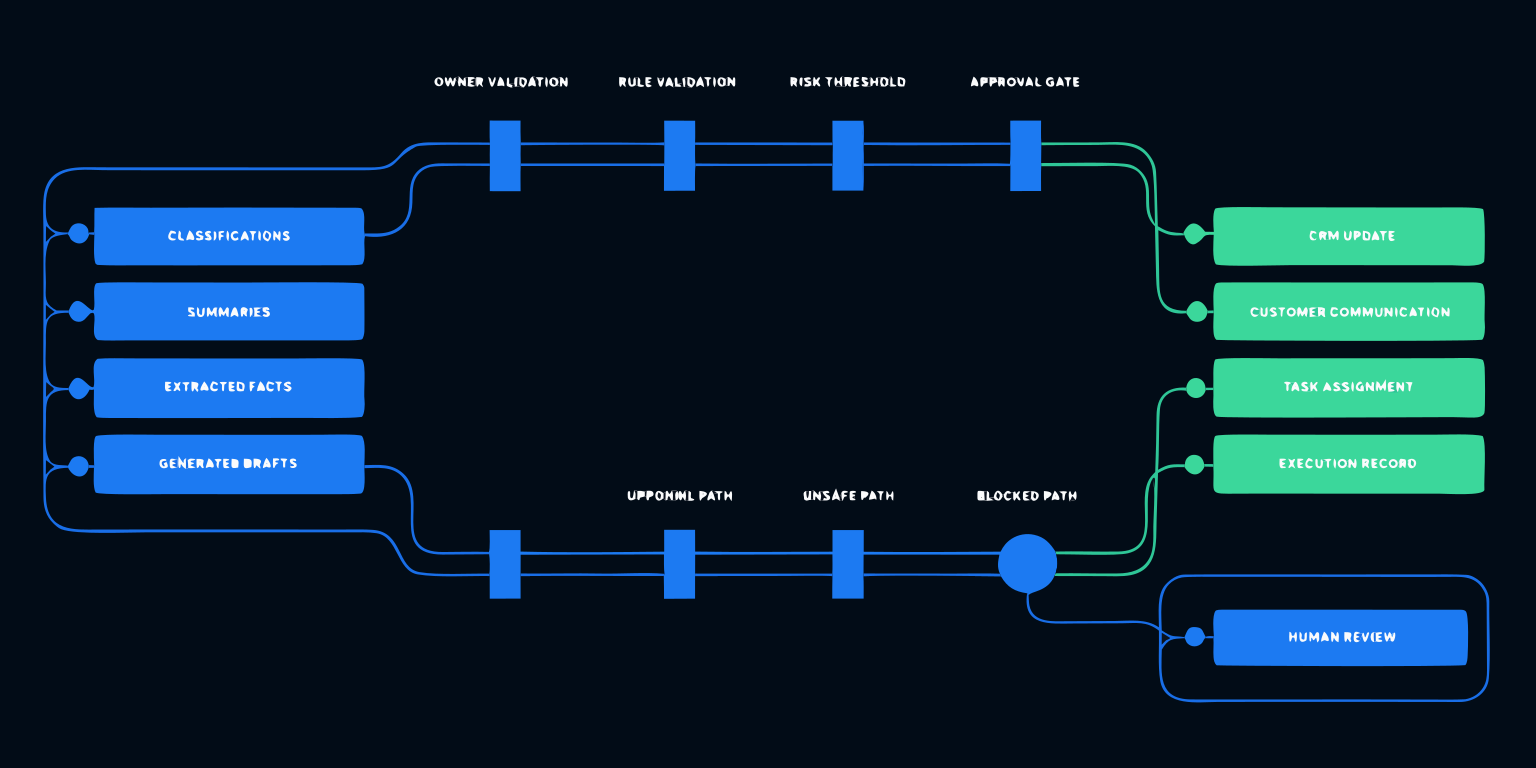
AI can be useful. It can read, summarize, classify, research, and draft. That does not mean it should be allowed to send customer messages, approve refunds, change jobs, offer discounts, or make commitments without someone checking first.
Concrete loops
Varon is for the work that cannot disappear into email, chat, software tools, or someone's memory.
Every example answers the same questions: what happened, who owns it, what rule applies, what action is allowed, and what proof gets kept.
Field Service
The request cannot wait until morning. Varon checks the service area, on-call owner, response rule, and approval path before the callback gets lost.
Estimates
The price changed and the team needs a clean record before promising, billing, or scheduling the extra work. Varon checks the old amount, new amount, customer approval, and owner limit.
Agency / professional services
The lead comes in while the owner is buried in client work. Varon checks fit, assigns the owner, prepares the first reply, and keeps follow-up from going cold.
Billing
Nobody wants to send the wrong money answer. Varon pulls the payment context, checks the refund rule, asks for approval when needed, and records the final response.
AI-prepared reply
AI can draft a useful answer, but it can also promise the wrong date or refund. Varon checks the facts, routes risky language for approval, and sends only the allowed response.
Owner control
The owner should not hunt through inboxes, chats, and tools to find the work that needs judgment. Varon surfaces blocked items, late approvals, risky actions, and proof from completed work.
Sales inquiry
Inquiries disappear when reps are in demos or travel. Varon checks the lead against fit rules, assigns the right owner, and tracks the first response before the lead goes cold.
Follow-up
When the original person forgets, the customer feels ignored. Varon tracks promised callbacks, surfaces overdue follow-ups, and ensures someone responds before the customer looks elsewhere.
Customer service
The customer needs an answer but the team is offline. Varon checks the request type, account status, and urgency, then prepares the context for the morning handoff.
Website content
Website changes can go live without the right checks. Varon tracks proposed updates, routes them for review, and ensures approval before publication.
Pick the closest one. Then show us where the handoff breaks in your business.
Existing stack
Varon works around the tools you already use — email, forms, CRMs like HubSpot and Salesforce, field-service tools like ServiceTitan or Jobber, accounting like QuickBooks, chat like Slack or Teams, spreadsheets, payment systems, and custom APIs. We map the work loop first, then connect the systems needed to control that loop.
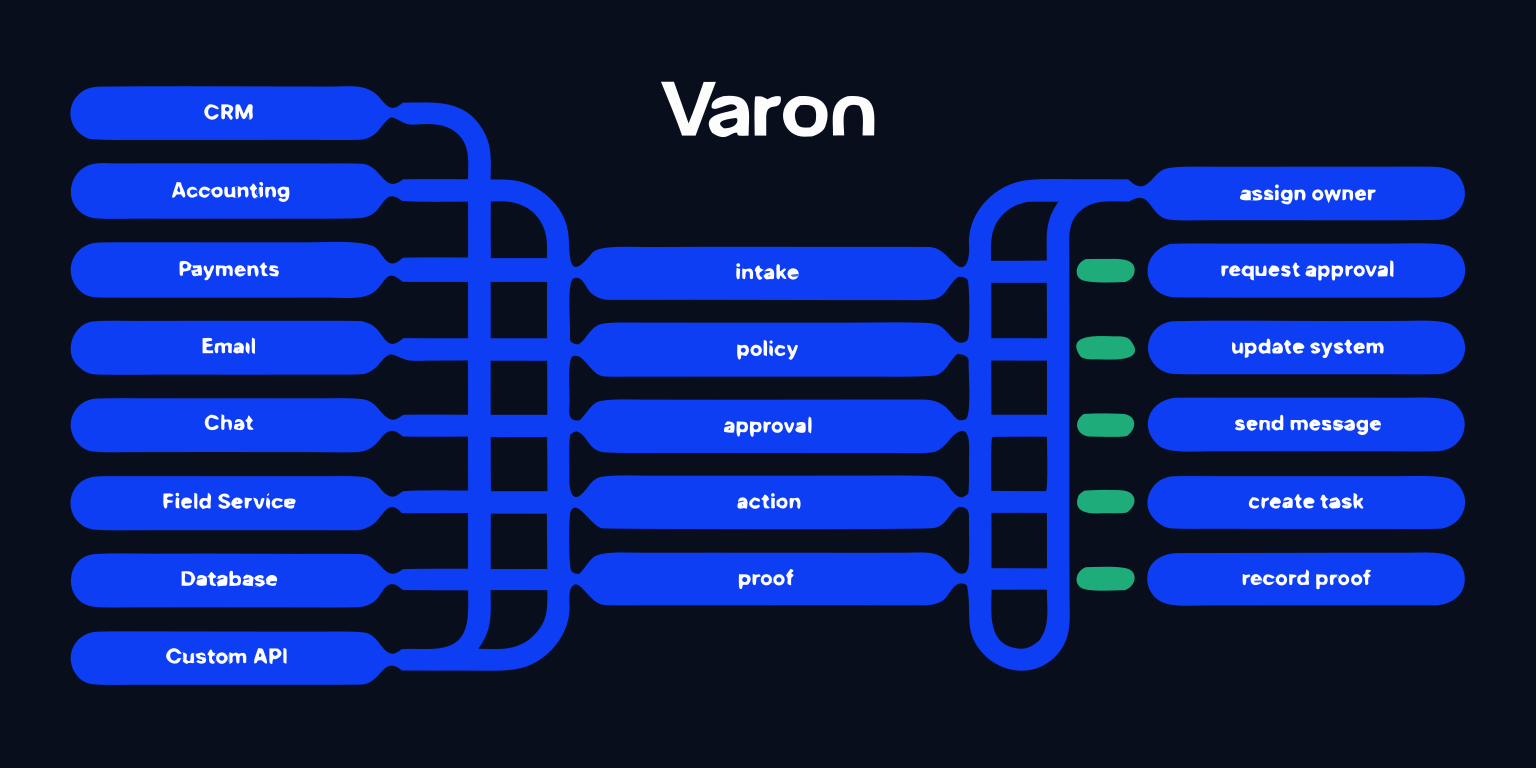
| Source System | Signal Varon Reads | Action Varon Controls | Proof Kept |
|---|---|---|---|
| HubSpot | New lead, stale deal, handoff note | Assign owner, update stage, create follow-up | Owner, stage change, timestamp, linked record |
| Salesforce | Opportunity change, account risk, approval request | Route review, update opportunity, trigger next step | Rule checked, approver, action taken, CRM record |
| Gmail | Customer request, escalation, billing thread | Draft approved reply, assign task, log outcome | Message source, owner, approval, sent status |
| QuickBooks | Invoice due, payment mismatch, refund request | Route approval, update invoice path, start follow-up | Invoice ID, rule, approver, result |
| Stripe | Failed payment, dispute, refund threshold | Pause risky action, request approval, start recovery path | Payment event, threshold, approver, action record |
| Slack/Teams | Team alert, escalation mention, approval response | Notify owner, collect approval, post status update | Channel, responder, decision, timestamp |
| ServiceTitan/Jobber | Job change, dispatch issue, customer complaint | Assign dispatcher, update job path, send approved message | Job ID, owner, approval, customer update |
| Custom API | Webhook event, internal system status, exception | Apply rule, call approved endpoint, write back result | Payload ID, rule outcome, endpoint, response |
Integrations are scoped during implementation.
We map the work loop first, then connect the systems needed to control it. Some tools support direct API actions. Others support event intake, approved drafts, task creation, exports, browser-based paths, or operator-assisted execution. We only call something a native integration after we confirm it exists and can support the loop safely.
Trust posture
If Varon cannot safely act, it stops and routes the item to the right person. The point is not blind speed. The point is controlled follow-through with proof.
It does not act on uncertainty. If the rule is unclear, the risk is high, or approval is missing, Varon waits for you.
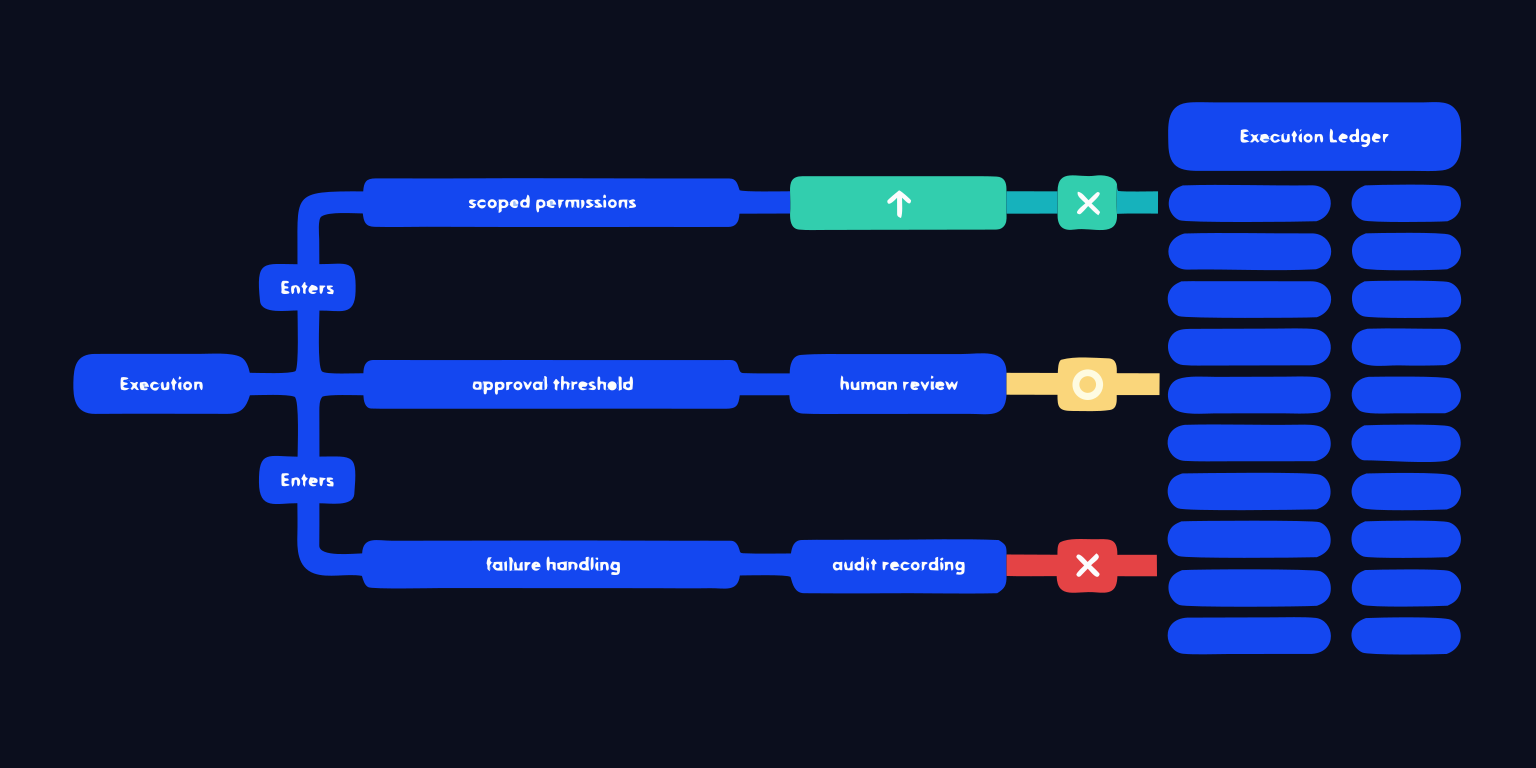
Varon only acts inside the systems and actions approved for the loop.
Risky action pauses for the right person before a customer message, refund, price, date, or job changes.
The source, rule, owner, approval, action, and result are kept together.
Where possible, correction paths are defined before the action runs.
Failed or unsafe work is blocked, escalated, or turned into a human task.
Some work should not be automated. Varon makes that boundary explicit.
Illustrative proof artifact
This is fictional sample data. It shows the kind of receipt a controlled loop should leave behind: source, owner, rule, approval, action, timestamp, external record, result, and blocker status.
Proof kept
original request, urgency classification, rule applied, approval, customer message, timestamps
How deployment works
We don't start with a big rollout. We start with one place where work gets missed.
You bring one stuck handoff — an urgent request, a stale lead, a late approval, an unpaid invoice, a follow-up that falls through the cracks.
Most customers start with a single stuck workflow and expand from there.
The first implementation is bounded: one workflow, 1–3 systems, defined ownership, approval boundaries, and a measured outcome.
We map the trigger, owner, rule, approval, allowed action, proof record, and first measurable outcome.
Then we run one controlled loop. If it works, we expand. If it doesn't, we say so.
You don't replace your tools. You add a control layer around them.
Buyer FAQ
Varon makes sure important business work does not get lost. It catches important events, checks who owns them, applies the rule, asks for approval when needed, moves the approved action forward, and keeps proof of what happened.
We start with one stuck handoff. Implementation time depends on the tools involved and how much direct integration is possible, but Varon is designed to start with one controlled loop before expanding.
Varon works around the tools you already use — email, forms, CRMs like HubSpot, field-service tools like ServiceTitan or Housecall Pro, accounting like QuickBooks, chat like Slack, spreadsheets, and payment systems. We map the work loop first, then connect the systems needed to control that loop.
No. Varon is designed to sit around the tools your team already uses. It controls the handoffs between them.
We measure one thing before and after Varon: response time, missed leads, approval delays, unpaid follow-ups, owner interruptions, or unresolved issues. Pick the metric that matters for your stuck handoff. One controlled loop proves the process works. Then we expand.
No. Automation moves tasks. Varon controls execution. It checks rules, assigns owners, asks for approval when risk appears, moves the approved next step, and keeps the record.
No. Varon can use AI where it helps, but Varon is not an uncontrolled AI agent. AI can classify, summarize, research, and draft. Varon controls whether anything important gets sent, changed, approved, or recorded.
It stops and routes the item to the right person. Some work should not be automated. Varon is built to make the boundary clear: proceed, ask for approval, create a task, escalate, or block.
Varon is built for owner-led and operator-led teams with 1–50 employees: contractors, field-service companies, local service businesses, agencies, and small B2B service firms where follow-up, approvals, and handoffs get missed.
Any event you define as important: a customer request, an urgent lead, a late approval, an unpaid invoice, a missed follow-up, or any work that needs to happen but doesn't.
Varon checks the rule for the action, pauses risky actions before they execute, routes to the right person for approval, and moves forward only when approved.
OpenClaw is one of the systems Varon can connect with when the customer already uses it. Varon stays positioned around the business outcome: keeping follow-up, task ownership, and daily execution from slipping.
Bring one real place where work gets missed, delayed, approved too late, handled from memory, or hard to prove. We will map the trigger, owner, rule, approval, allowed action, proof record, and first measurable outcome. If Varon can't make it clearer, safer, or easier to prove — we'll say so.
Show us one stuck handoffStart with one process, not a science project.